1 inch is equal to 2.54 centimeters or 25.4 millimeters. It is a small unit of length used in the imperial measurement system.
Many people hear about inches every day, but they do not always understand the actual size. This is because an inch is small and hard to imagine without real examples. That is why comparing it with everyday objects is the best way to understand it clearly.
An inch is used in many parts of life. It is used for phone screens, TV sizes, furniture, clothing, school tools, and building work. Even small objects like screws and buttons are often measured in inches.
A simple way to understand 1 inch is by looking at the width of an adult thumb. For many adults, the thumb width is very close to 1 inch. Small objects like paperclips and bottle caps are also close to this size.
Even though 1 inch looks tiny, it is very important. Small measurements help people build things correctly and measure objects with accuracy. Many industries depend on inches every day.
In this complete guide, you will learn:
- what 1 inch means,
- how long it looks in real life,
- simple conversion values,
- where inches are used,
- 13 real objects that are about 1 inch long,
- and answers to common questions.
This guide is written in very easy English so everyone can understand it without confusion.
How Long is 1 Inch?
1 inch is equal to:
- 2.54 centimeters
- 25.4 millimeters
- 0.0254 meters
- 0.0833 feet
It is about:
- the width of an adult thumb,
- the size of a bottle cap,
- or the length of a small paperclip.
1 inch is a very small measurement, but it is used in many important things around us.
Conversion Table of 1 Inch
| Unit | Value |
| Inches | 1 in |
| Centimeters | 2.54 cm |
| Millimeters | 25.4 mm |
| Meters | 0.0254 m |
| Feet | 0.0833 ft |
This table helps you quickly understand the size of 1 inch in different measurement systems.
What is 1 Inch?
An inch is a unit of length in the imperial system. It is mostly used in countries like the United States and sometimes in the United Kingdom and Canada.
The official size of 1 inch is exactly 2.54 centimeters. This value is fixed around the world so everyone uses the same measurement.
Long ago, people used body parts to measure things. The inch was connected to the width of a human thumb. Over time, scientists created a standard measurement so there would be no confusion.
Today, inches are used in many industries because they are useful for measuring small objects. Inches help people measure things with better accuracy.
You can find inch measurements in:
- electronics,
- furniture,
- clothing,
- construction,
- tools,
- and printing.
Even today, many products around the world are sold using inch sizes.
Why Understanding 1 Inch is Important
Knowing how long 1 inch is can help you in daily life. Many objects around you use inch measurements.
For example, when buying a TV or phone, the screen size is measured in inches. If you do not understand inches, it becomes difficult to imagine the actual size.
In construction work, small mistakes can create big problems. Builders use inches to make sure things fit correctly.
In fashion and tailoring, inches are used for body measurements like:
- waist size,
- sleeve length,
- chest size,
- and pant length.
Even small differences matter when measuring clothes.
Understanding 1 inch can also help students in school. It improves measuring skills and helps with math and science learning.
Where is 1 Inch Used in Real Life?
Inches are used almost everywhere. Even though they are small units, they are very important.
Electronics
Phones, laptops, tablets, and televisions use inches for screen sizes.
For example:
- a phone may have a 6-inch screen,
- a laptop may have a 15-inch screen,
- and a TV may have a 55-inch screen.
People around the world understand screen sizes using inches.
Construction
Builders and engineers use inches for accurate measurements.
They measure:
- pipes,
- screws,
- wood,
- tiles,
- and tools.
Small measurements are important for safety and quality.
Furniture
Furniture sizes often include inches.
Shelf depth, table thickness, and small furniture parts are measured using inches.
Clothing and Fashion
Tailors use inches to make clothes fit properly.
Waist sizes, sleeve lengths, and shoe measurements often use inches.
Printing and Design
Paper size, margins, and graphic design layouts also use inches.
Designers need exact measurements to create balanced designs.
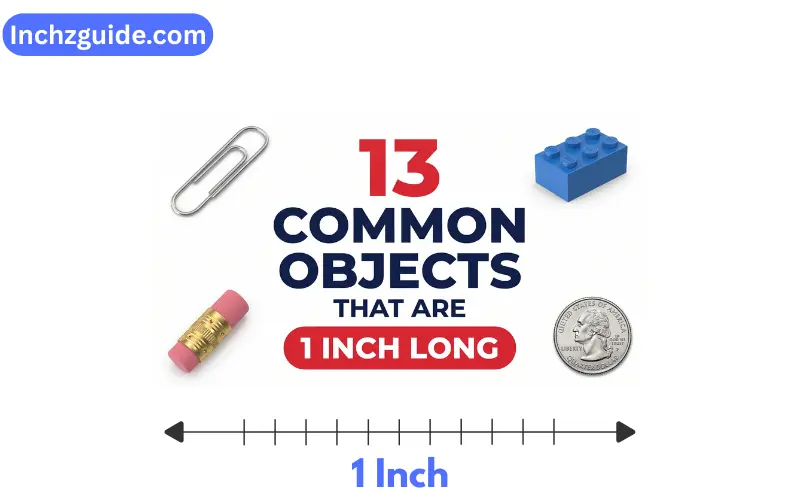
13 Real-Life Objects That Are About 1 Inch Long
Real-world examples make it easier to understand measurements. Here are 13 objects that are close to 1 inch long or wide.
1. Adult Thumb Width
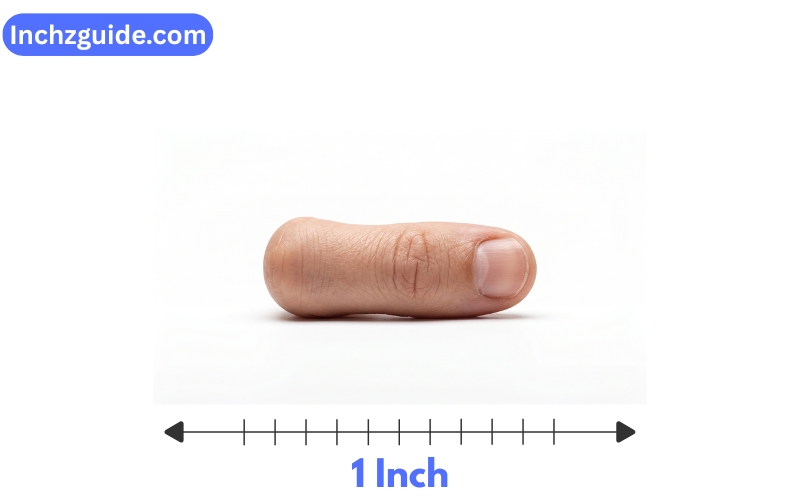
The width of an adult thumb is about 1 inch.
This is one of the easiest ways to estimate 1 inch without a ruler. Many people use their thumb when they need a quick measurement.
Long ago, body parts were commonly used for measuring things. The thumb became a natural reference because it is always available.
If you place your thumb next to a ruler, you may notice it is very close to 1 inch wide.
2. Small Paperclip
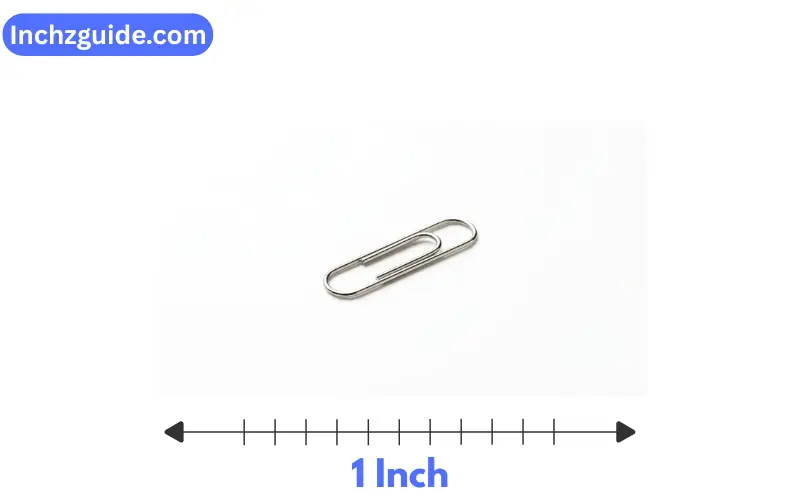
A small paperclip is around 1 inch long.
Paperclips are common in schools, homes, and offices. Because they are easy to find, they are helpful for understanding small measurements.
Children can use paperclips to learn measurement in a simple way.
3. Bottle Cap
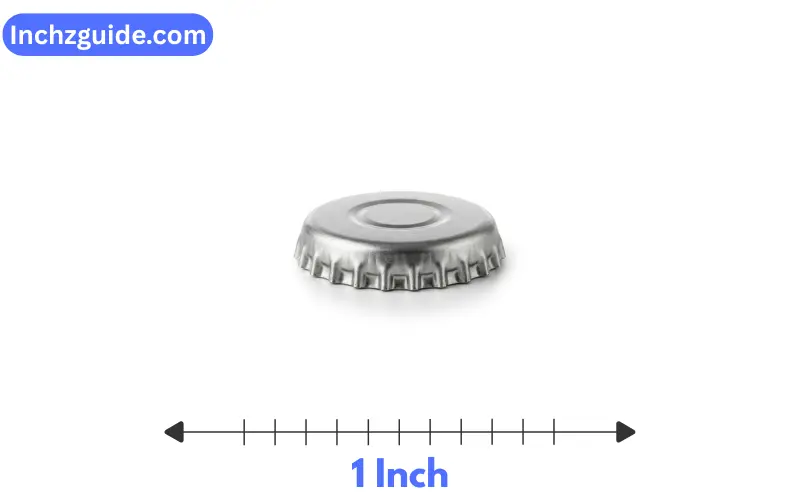
Many bottle caps are close to 1 inch in diameter.
You can find bottle caps on water bottles, soda bottles, and juice containers.
This makes them an easy real-life comparison for understanding inch size.
4. Shirt Button
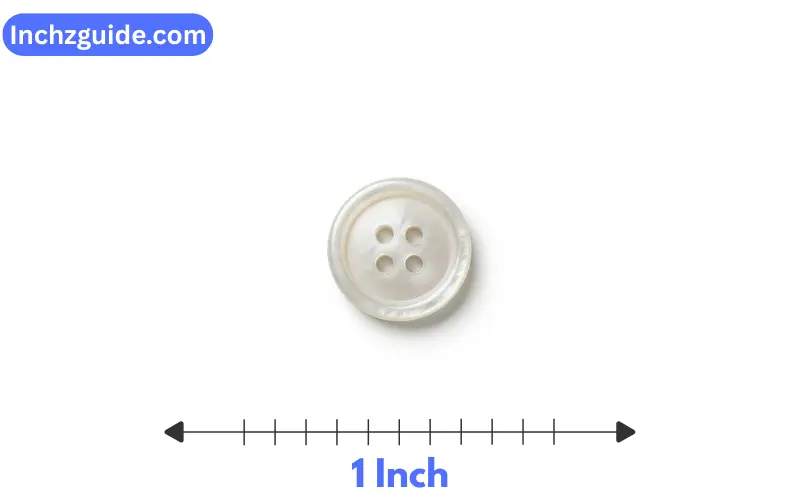
Large shirt buttons are often around 1 inch wide.
Buttons are small, but they are designed carefully to fit clothing properly.
Fashion designers use measurements like inches to create balanced clothing styles.
5. Dice Cube
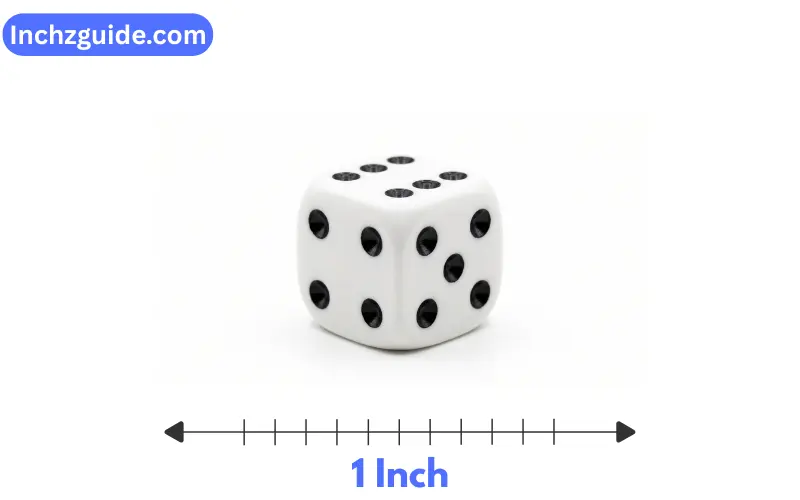
The width of a dice cube is close to 1 inch.
Dice are used in games, schools, and math activities. They are small and easy to hold.
This makes them a fun example for learning measurements.
6. USB Connector
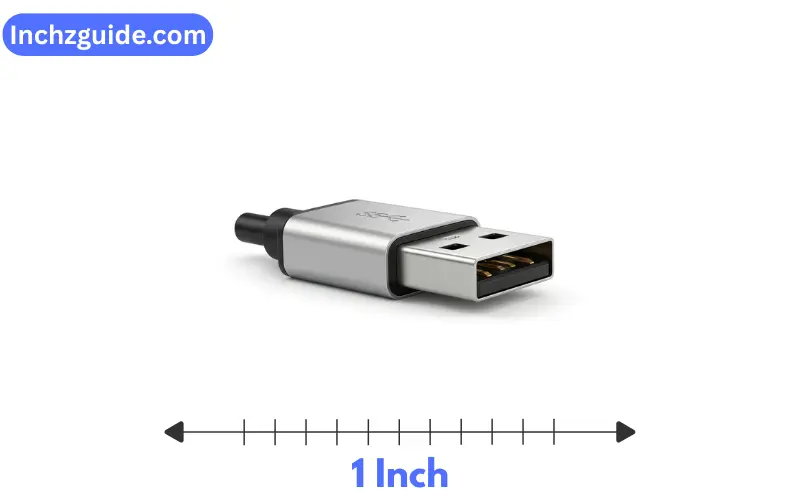
The metal part of a USB connector is close to 1 inch wide.
USB devices are found in computers, laptops, TVs, and gaming systems.
Technology products often use precise measurements for proper fitting.
7. Pencil Eraser
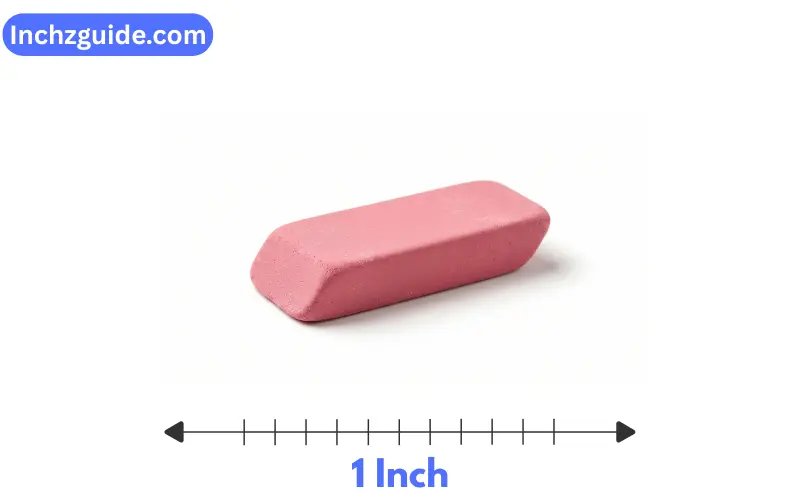
Some pencil erasers are close to 1 inch wide.
Students use pencils every day, so this is an easy object to remember.
Small school supplies are good tools for learning size comparisons.
8. LEGO Brick
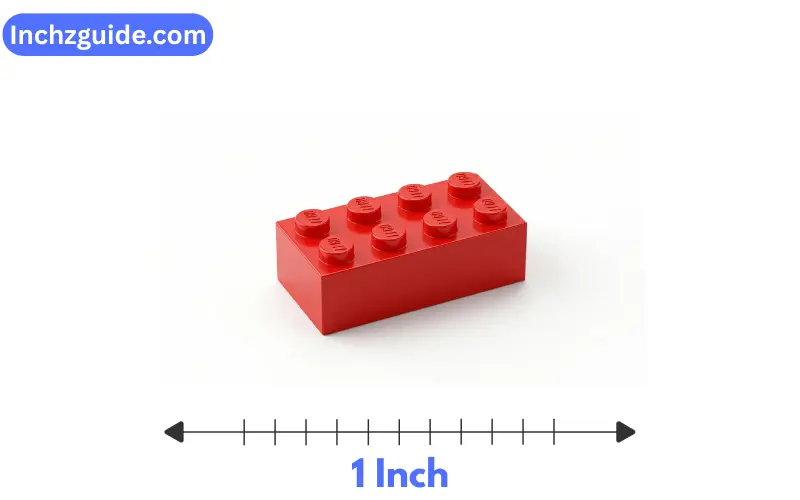
Some LEGO pieces are about 1 inch long or tall.
LEGO bricks are made with accurate measurements so they fit together perfectly.
Children often learn shapes, spacing, and size by playing with LEGO.
9. Postage Stamp
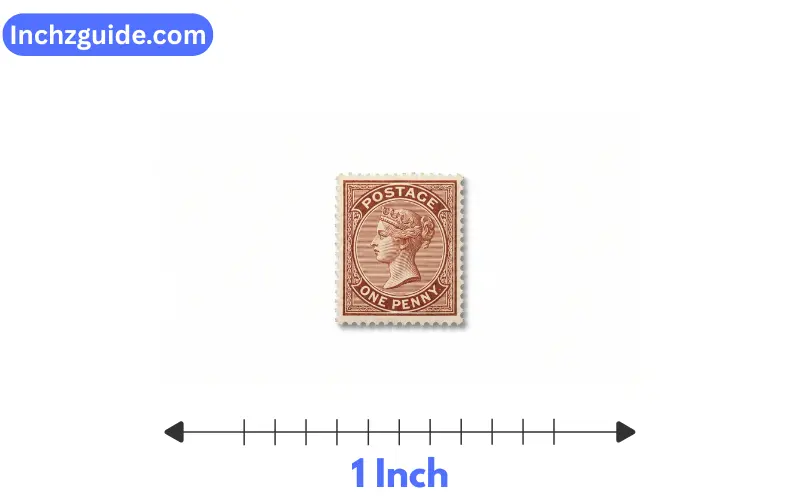
A postage stamp is often close to 1 inch in size.
Stamps are small paper pieces used for mailing letters.
Their size makes them useful for understanding tiny measurements.
10. Coin Stack
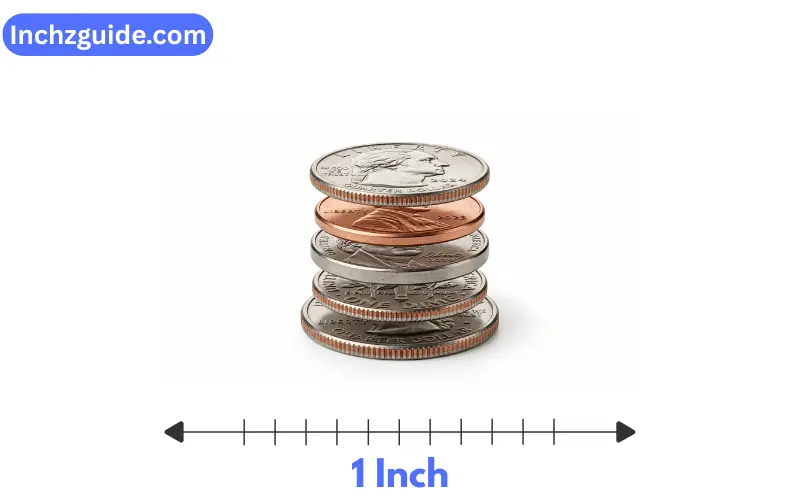
A small stack of coins can be around 1 inch high.
Coins are useful for comparing height and thickness.
People sometimes use coins when they need quick measuring estimates.
11. House Key Head
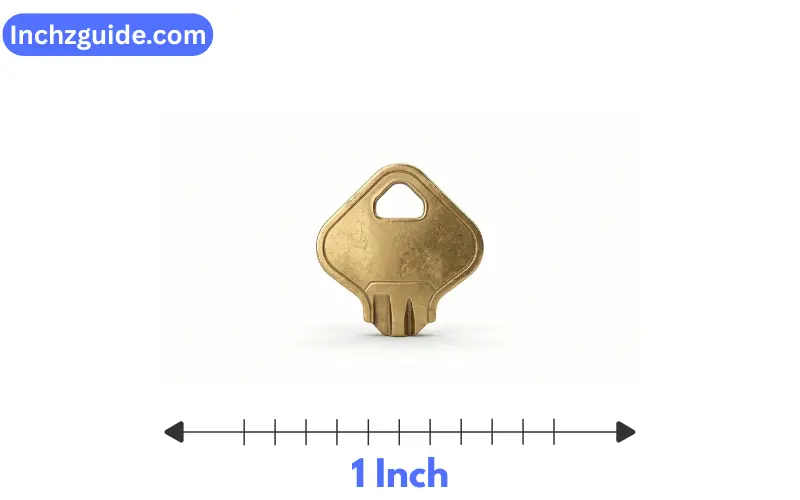
The top part of many house keys is close to 1 inch wide.
Keys are everyday objects used for locks and security.
Because we use keys daily, they help people remember inch size more easily.
12. Candy Cube
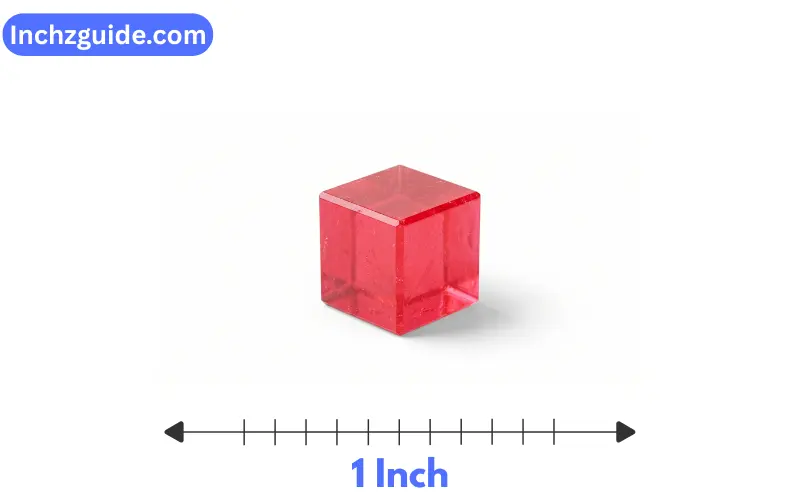
Small candy cubes are often around 1 inch in size.
Candy companies use exact measurements for packaging and design.
This example makes learning measurements more enjoyable for children.
13. Watch Dial
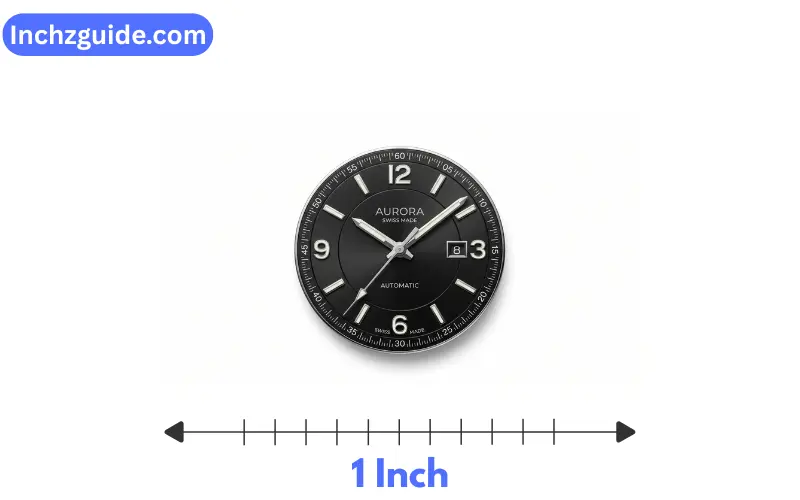
Some watch dials are around 1 inch wide.
Watches are designed with precision and accuracy.
Small measurements are very important in watchmaking.
How to Measure 1 Inch Without a Ruler
You can measure 1 inch even without a ruler.
Here are some easy methods:
- use your thumb width,
- compare with a bottle cap,
- use a paperclip,
- or look at a large button.
These simple objects help you estimate inch size quickly.
This is useful when you do not have measuring tools nearby.
Difference Between Inch and Centimeter
| Feature | Inch | Centimeter |
| Measurement System | Imperial | Metric |
| Exact Value | 2.54 cm | Base metric unit |
| Common Usage | USA & UK | Worldwide |
| Used For | Screens, tools | Science, schools |
Both measurements are useful, but centimeters are more common worldwide.
Advantages of Using Inches
There are many benefits of using inches.
Easy for Small Measurements
Inches are very useful for measuring small things accurately.
Common in Electronics
TVs, laptops, and phones use inches globally.
Helpful in Construction
Builders use inches for detailed work.
Easy to Compare
People can compare inches using body parts and small objects.
Disadvantages of Using Inches
Even though inches are useful, there are some disadvantages.
Not Used Everywhere
Many countries mainly use centimeters and meters.
Conversion Needed
People often need to convert inches into centimeters.
Can Confuse Beginners
Some people find imperial measurements harder to understand.
Fun Facts About 1 Inch
- 12 inches make 1 foot.
- 36 inches make 1 yard.
- The inch is one of the oldest measuring units.
- Most screen sizes are measured in inches.
- The inch is used in many industries around the world.
Importance of 1 Inch in Daily Life
1 inch may look very small, but it is extremely important.
Small measurements help:
- build strong furniture,
- create accurate tools,
- design electronics,
- and make clothes fit correctly.
Without accurate measurements, many products would not work properly.
Even small differences can matter a lot in engineering and design.
FAQs
How long is 1 inch in cm?
1 inch is equal to 2.54 centimeters.
Is 1 inch a small measurement?
Yes, 1 inch is a small unit used for precise measuring.
Can I estimate 1 inch without a ruler?
Yes. You can use your thumb width or objects like bottle caps and paperclips.
Why do Americans use inches?
The United States still uses the imperial measurement system in many areas.
Is 1 inch bigger than 1 centimeter?
Yes.
1 inch equals 2.54 centimeters, so it is bigger.
Where are inches commonly used?
Inches are commonly used in:
- electronics,
- furniture,
- clothing,
- construction,
- and tools.
Are screen sizes measured in inches?
Yes.
Phones, laptops, monitors, and TVs use inches for screen sizes.
Conclusion
Now you fully understand how long 1 inch is.
1 inch equals:
- 2.54 centimeters,
- 25.4 millimeters,
- and 0.0833 feet.
Even though it is small, it is one of the most important measurements used in everyday life. Inches are used in phones, TVs, clothing, furniture, tools, and many other products.
Using real-world objects like thumbs, bottle caps, paperclips, and buttons makes it much easier to imagine the size of 1 inch.
Understanding inch measurements can help with shopping, school work, building projects, and daily tasks. It is a simple measurement, but it plays a very big role in the world around us.